Rackoya: A Playful Yet Polished Sans Serif Font for Small Business Branding
It was 10 a.m. on a rainy Tuesday, and I was elbow-deep in label mockups for my friend Maya’s small-batch candle studio. She’d just launched three new scents—“Honey & Sage,” “Coastal Fog,” and “Midnight Cedar”—and the old labels felt flat. Too safe. Too generic. The current font? A free sans serif that looked fine on screen but vanished into the background on jar stickers and Instagram posts. That’s when I pulled up Rackoya.
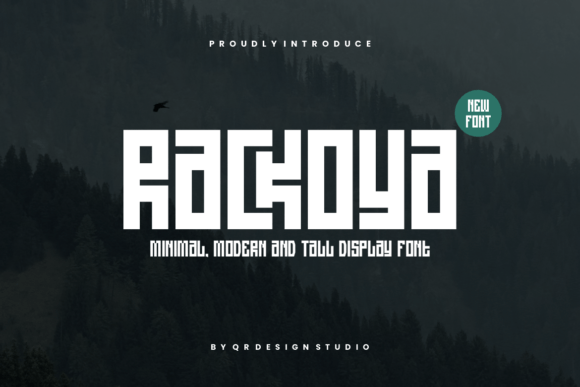
Within minutes, something clicked. Not because it was flashy—but because it carried *personality* without sacrificing clarity. Rackoya is a modern sans serif font with a gentle, whimsical tilt—like a friendly nod rather than a shout. Its letterforms are clean and open, with subtle quirks: a soft curve on the lowercase ‘a’, a slightly lifted crossbar on the ‘t’, and rounded terminals that feel handmade but never sloppy. It doesn’t try to be cute—it simply feels warm, intentional, and quietly confident.
Why Rackoya Works So Well on Real Business Materials
I tested Rackoya across five touchpoints Maya uses daily: candle jar labels, thank-you cards tucked into orders, Instagram story templates, her Etsy shop banner, and a simple one-page menu for local pop-up markets. In every case, it elevated the look—not by adding complexity, but by adding *coherence*. Customers don’t read fonts consciously—but they *feel* them. Rackoya’s balanced proportions and generous spacing make even short phrases (“Hand-Poured in Portland”) feel grounded and trustworthy.
On small jar labels (think 1.5-inch width), Rackoya holds up beautifully at 8–10 pt sizes—no blurring, no cramped letters. Its x-height is generous, and its letter spacing is thoughtfully tuned, so “Sage” or “Cedar” doesn’t collapse into a blob. On mobile screens—where most of Maya’s customers browse her shop—it stays legible without zooming. And unlike some decorative display fonts, Rackoya doesn’t sacrifice function for flair: it’s designed to be read, not just admired.
Where Rackoya Shines—and Where to Use It Thoughtfully
Rackoya is strongest as a display font: perfect for logos, product names, packaging headers, social media banners, and website headlines. It’s not meant for long paragraphs or dense ingredient lists—that’s where pairing comes in. Think of Rackoya as the voice of your brand’s personality, while a clean, neutral sans serif (like Inter, Montserrat, or Open Sans) handles the supporting text: descriptions, care instructions, shipping details, or contact info.
For Maya’s candle line, we used Rackoya for scent names and her studio name (“Tide & Wick”)—always in bold weight for impact. Then we paired it with a light-weight, highly readable sans serif for burn instructions and origin notes. The result? Instant visual hierarchy. Customers see the emotion first (Rackoya), then absorb the information second (supporting font). It’s subtle—but it guides attention exactly where it needs to go.
Real Pairing Ideas That Just Work
You don’t need design training to pair Rackoya well. Here’s what’s worked across real small business projects:
- With a clean sans serif (e.g., Lato, Poppins): Ideal for e-commerce banners, Shopify product pages, and email headers—modern, approachable, scalable.
- With a quiet serif (e.g., Merriweather, Cormorant Garamond): Lovely for boutique tags, artisan skincare labels, or café menus—adds gentle contrast without competing.
- With a delicate script or handwritten font (used sparingly): Great for “hand-poured,” “small batch,” or “made with love” accents—just one line, not full sentences.
What doesn’t work? Overloading Rackoya with too many effects (drop shadows, heavy outlines) or stretching it unnaturally. Its charm lives in its natural rhythm—so let it breathe.
Practical Tips Before You Install It
Rackoya is a premium font, and that matters. Unlike free fonts that may lack proper kerning, language support, or commercial licensing, Rackoya includes multiple weights (Light, Regular, Bold), true italics, OpenType features like ligatures and stylistic alternates, and broad multilingual character sets—including accented characters used in French, Spanish, and German. That means if you sell internationally or work with bilingual clients, you won’t hit a wall mid-project.
Before downloading, always check the license. Rackoya’s commercial license covers use on physical products (candle labels, bakery boxes, boutique tags), digital assets (Instagram templates, Canva graphics), client work, and even resale items like printable planners or SVG bundles—as long as you’re not reselling the font file itself. It’s also available in standard formats: .OTF, .TTF, and web-ready .WOFF—so it works in Adobe apps, Figma, Canva, and web builders alike.
A Font That Helps Your Brand Feel Like *You*
Here’s what surprised me most about Rackoya: it didn’t force Maya’s brand into a new direction—it helped her express what was already there. Her candles are thoughtful, unhurried, and quietly joyful. Rackoya mirrored that tone without needing explanation. No jargon, no overdesign—just a typeface that feels like a natural extension of her voice.
That’s the quiet power of good typography. It doesn’t shout “look at me!”—it says, “you’re in the right place.” Whether you’re updating a café menu, designing a sticker for your handmade soap, refreshing your online shop banner, or choosing a font for your coaching brand’s lead magnet, Rackoya offers polish without pretension. It’s professional enough for a boutique owner ordering custom hang tags, playful enough for a children’s illustrator launching a print shop, and versatile enough to grow with your business—not just today, but six months from now, when your first wholesale order arrives and consistency suddenly matters more than ever.
If you’ve been using the same default font across all your materials—or worse, mixing three different free fonts just to “try something new”—Rackoya is a thoughtful, low-friction upgrade. It’s not magic. But it *is* the kind of detail that makes people pause, remember your name, and reach for your product on the shelf—or click “add to cart” without second-guessing.