Sweeney Marla: A Graceful Script Font for Handmade Charm
There’s a quiet magic in the moment you type “Honey Lavender” into your design software and watch it bloom across the screen in Sweeney Marla. I was testing candle labels one Tuesday—just me, my Cricut, and a stack of kraft sticker paper—when I swapped out a generic script for Sweeney Marla and felt the whole label lift. Not literally, of course—but suddenly it had warmth, intention, and that soft, confident elegance handmade goods deserve.
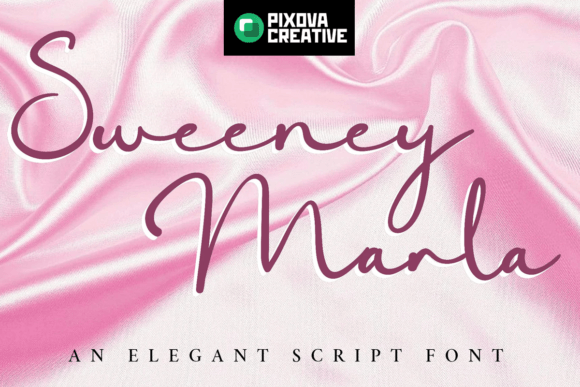
Sweeney Marla is a premium script font from Script Amp, designed with real makers in mind. It’s not overly ornate or fussy—it flows like ink pulled gently across parchment, with subtle contrast in stroke weight and delicate entry/exit swashes that feel intentional, not automatic. The letters lean just slightly forward, giving motion and friendliness. It’s classic enough for a vintage wedding invitation, modern enough for a minimalist tote bag, and graceful enough to hold its own on a small 1.5-inch gift tag.
I’ve used it across so many real product types: hand-poured candle labels (printed on matte sticker stock), printable planner cover pages (where its soft curves soften the grid lines), boutique packaging tags tied with twine, farmhouse-style wooden signs, and even digital download previews for Etsy listings. Every time, it adds quiet authority—like the product already knows its place in someone’s home or heart.
What makes Sweeney Marla especially useful is how thoughtfully it balances display impact with practical legibility. It shines brightest at larger sizes—think 24pt and up for greeting card headlines, 36pt+ for wall art titles, or 48pt for a welcome board at a small wedding venue. For smaller applications like 8mm stickers or 12pt product labels, I stick to short phrases (“Made With Love,” “Small Batch,” “Est. 2023”) and avoid tight spacing. The font includes clean alternates and optional swashes, so I’ll toggle those on for invitations but skip them for machine-cut vinyl decals where crisp edges matter more than flourish.
One thing I always check before finalizing any file: the included file formats and licensing terms. Sweeney Marla comes in OTF and TTF, with full commercial use rights—meaning it’s safe to embed in printable PDFs, layer into SVG files for cutting machines, or use on physical products like mugs and tees. No hidden restrictions. I also double-check ligatures and language support if I’m designing bilingual holiday tags or multilingual shop signage—Sweeney Marla covers basic Latin characters well, though extended diacritics aren’t included.
Pairing is where this script truly sings. I almost always pair Sweeney Marla with a clean, neutral sans serif—think Montserrat Light or Inter Regular—for body text, ingredient lists, or care instructions. That contrast keeps things grounded: the script carries the emotion, the sans serif delivers clarity. For wedding stationery, I’ve layered it over a delicate serif like Playfair Display for a refined editorial feel. And yes—I’ve even paired it with another gentle script (like Dela Gothic One) for layered quotes on printable wall art, using Sweeney Marla for the main phrase and the second font for a subtle accent line beneath.
Here’s how it works across real maker uses:
- Candle & soap labels: Used for scent names and brand lines—its smooth rhythm mimics the calm of slow-burn self-care.
- Greeting cards: Perfect for “Happy Birthday” or “With Sympathy” headers; feels personal without being cutesy.
- Wedding invitations: Paired with a simple serif for details, Sweeney Marla gives ceremony announcements warmth and timelessness.
- Printable wall art: Works beautifully in quotes like “Breathe Deeply” or “Gather Joy”—soft enough for nurseries, strong enough for studios.
- Tote bags & shirts: Holds up well on fabric when printed at 60–80pt; avoids thin strokes that might fade after washing.
- Digital templates: Looks polished in Canva mockups and PDF previews—customers instantly recognize the care behind the design.
- Seasonal products: Shines on holiday tags (“Hand-Poured • Made in Oregon”), Easter egg labels, or autumn market banners.
Readability matters—not just for eyes, but for machines. When prepping files for my Silhouette Cameo, I convert Sweeney Marla to outlines for intricate cuts, or simplify swashes for small sticker sheets. On printed cards, I avoid ultra-light weights for fine detail—if it’s going to sit on a coffee table or get tucked into a gift box, I want it to read clearly at arm’s length. And for listing thumbnails? I zoom out to 25% view: if the script still reads as elegant (not blurry or chaotic), it’s ready.
What I love most about Sweeney Marla isn’t just how it looks—it’s how it makes my process feel. There’s less second-guessing. Less toggling between five fonts to find “the one.” It has presence without shouting, charm without clutter, and that rare balance of personality and professionalism. Whether I’m sketching a new candle line, updating my shop banner, or designing a set of printable gratitude cards for November, Sweeney Marla shows up as a quiet collaborator—not a decoration, but part of the voice.
It reminds me that typography isn’t just about letters. It’s about tone. It’s about telling someone, before they even read the words, *this was made with attention*. And in a world of fast-scrolling feeds and mass-produced goods, that kind of intention is one of the most beautiful materials we have.